Avery Flores · 29 September 2026
Mapping Intersections in Global Advocacy Narratives Across Climate Agreements Trade Evolutions and Reporting Standards
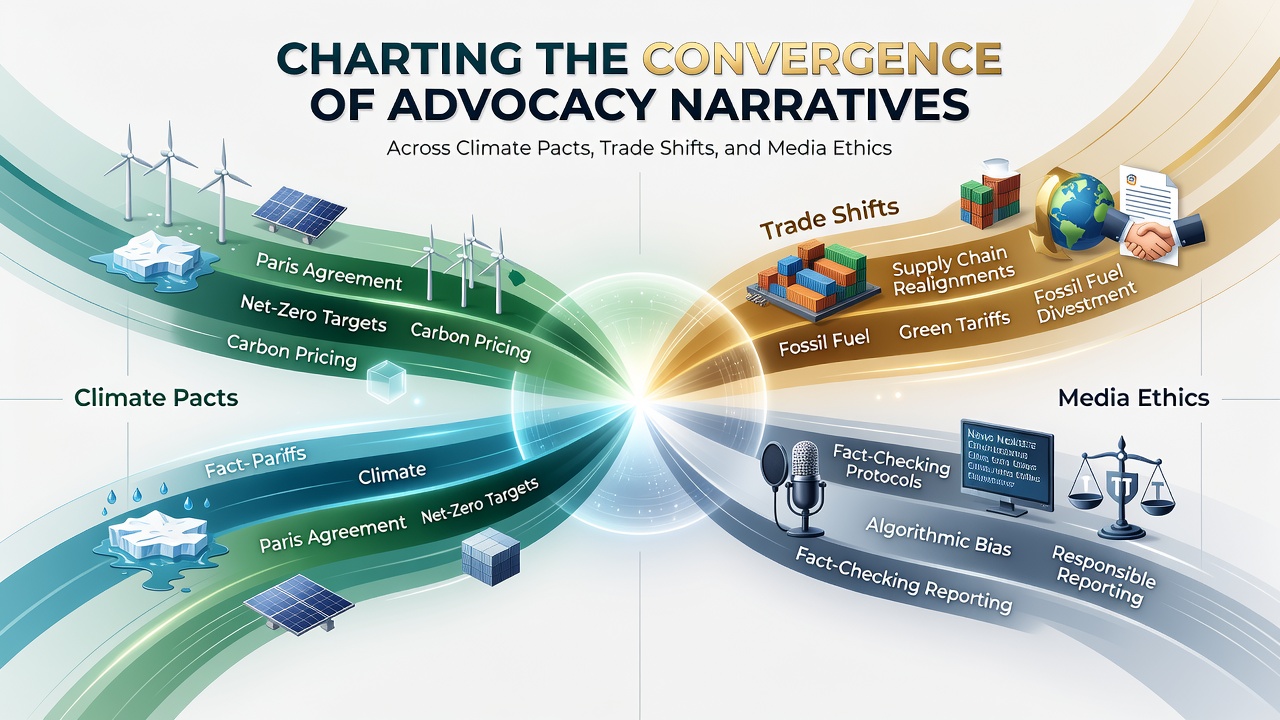
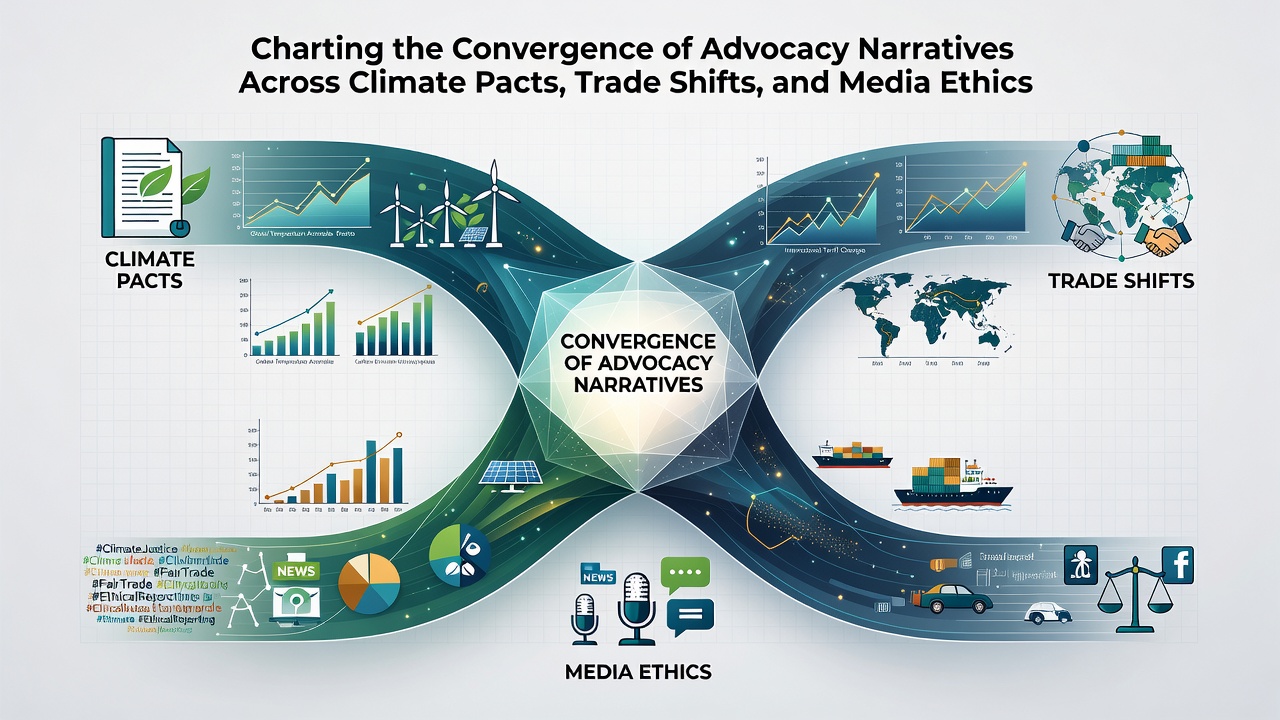
Advocacy narratives have begun to weave together threads from climate agreements trade policy adjustments and questions of media accountability in ways that observers note reflect broader shifts in how information travels across borders and sectors. Researchers have tracked these patterns through data from international bodies showing how groups frame environmental commitments alongside economic realignments while holding outlets to standards of accuracy and balance.
Climate Pacts as Anchors for Broader Campaigns
International climate frameworks such as the Paris Agreement continue to serve as reference points for organizations that link emission reduction targets with calls for policy consistency in other areas and data from the United Nations Framework Convention on Climate Change indicates that signatory nations reported updated nationally determined contributions through mid-2026. In September 2026 several regional summits examined how these commitments intersect with supply chain adjustments in sectors like renewable energy components where trade volumes have fluctuated due to tariff revisions in multiple jurisdictions. Experts point out that advocacy materials often present these pacts as foundations for arguments that extend into labor standards and resource allocation without isolating climate goals from economic contexts.
Trade Shifts Influencing Narrative Framing
Changes in global commerce have prompted organizations to adjust their messaging as tariffs on technology goods and agricultural products altered flows between major economies according to figures released by the World Trade Organization. Analysts have observed that groups advocating for sustainable development now incorporate trade data into their communications to illustrate connections between market access and environmental outcomes and this approach appears in reports that cite specific bilateral agreements revised during 2025 and 2026. Observers note that such integrations allow campaigns to address multiple audiences simultaneously while relying on publicly available statistics from government agencies in Europe Asia and North America.
Media Ethics in the Transmission of These Narratives
Standards for journalistic practice have come under scrutiny when coverage of these intersecting topics involves selective sourcing or unverified claims and professional bodies such as the Canadian Association of Journalists have issued guidance on verifying cross-sector claims that combine climate metrics with trade statistics. Studies from academic institutions in Australia have examined how outlets handle conflicts of interest when reporting on advocacy campaigns that draw from both environmental accords and commercial policy debates and the findings highlight instances where fact-checking protocols were applied to claims about projected economic impacts through 2027. People who monitor these developments note that ethical guidelines emphasize transparency in attribution particularly when narratives travel across platforms that amplify messages from nongovernmental organizations and government releases alike.
Case Examples of Converging Threads
One documented instance involved advocacy around a regional trade pact that included provisions for green technology transfers where campaign materials referenced both Paris Agreement progress reports and ethical reporting requirements for disclosing funding sources. Another case tracked by researchers showed how media outlets in multiple countries covered disputes over carbon border adjustments by citing data from the European Commission alongside perspectives from trade ministries in South America and this coverage drew attention to the need for consistent sourcing practices. Those who have studied these patterns find that advocacy groups sometimes coordinate releases timed with trade negotiations while urging journalists to apply uniform verification standards across all cited materials.
Conclusion
The documented intersections among climate pacts trade adjustments and media ethics reveal ongoing adaptations in how information is structured and disseminated and records from international organizations continue to provide the raw material for these evolving narratives. Observers continue to monitor these developments through established channels as new data emerges from September 2026 onward.